



"Malbec is one of the few grapes whose history is also the history of its rescue." The grape that today defines Argentine wine was, by the middle of the twentieth century, in serious decline in its native France. In Bordeaux it had been pushed to the margins by Merlot and Cabernet Sauvignon. In Cahors, its other historical home, it was struggling against frost and disease. Without Mendoza, Malbec might not have survived the century as a significant wine grape at all.
Planning your visit? Discover our private wine tours in Mendoza — or explore our luxury wine tours in Mendoza.
This is the long story of how that happened — from the medieval vineyards of southwestern France to the high-altitude vines of Luján de Cuyo and the Uco Valley. For travelers thinking about Mendoza, knowing this history changes how the wines taste.
Origins: a grape with too many names
Malbec originated in southwestern France, where it has been cultivated for at least eight centuries. Across the region it accumulated dozens of synonyms — Auxerrois in Cahors, Côt in the Loire, Pressac in parts of Bordeaux, and so on. Many wine drinkers don't realize that the Malbec on an Argentine label and the Côt on a Loire label are the same grape.
The variety's wine identity historically was clearest in Cahors, where it produces a deep, almost black-coloured wine that medieval traders called vin noir (black wine). Cahors Malbec was sufficiently distinct that it was exported across Europe in the Middle Ages, and was favoured by the courts of England before the rise of Bordeaux.
The first decline
Two events damaged Malbec in France in the nineteenth and early twentieth centuries:
1. Phylloxera — the root louse that destroyed most of Europe's vineyards in the late 1800s — hit Malbec particularly hard because the variety did not graft well onto the new American rootstocks that saved most other grapes. Many Malbec vineyards were replanted with other varieties.
2. The 1956 frost — a catastrophic late spring frost that destroyed approximately 75% of the Malbec vineyards in Bordeaux. After this event, most growers replanted with Merlot, which had become commercially dominant and was easier to ripen.
By the 1970s, Malbec was a marginal grape in France, surviving primarily in Cahors and as a minor blending component in some Bordeaux estates.
The Argentine chapter
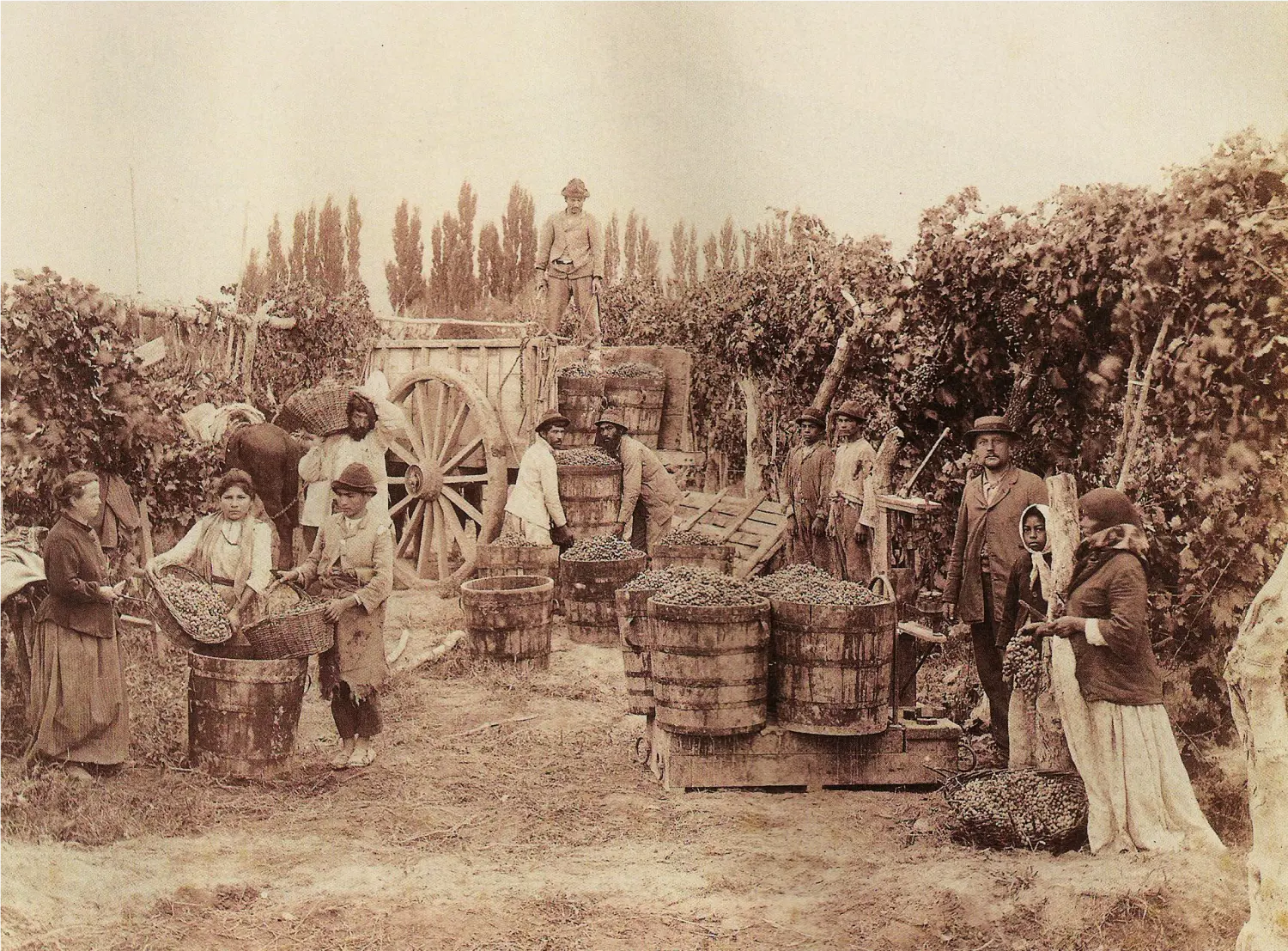
The grape's arrival in Argentina is precisely dated. In 1853, French agronomist Michel Pouget was hired by then-governor Domingo Faustino Sarmiento to establish a national agricultural school. Pouget imported European vine cuttings, including significant quantities of Malbec, and planted them in Mendoza. This is the foundational moment of modern Argentine wine.
For more than a century after Pouget's planting, Malbec was simply one of many grapes grown in Mendoza, valued mainly for its ability to add colour and body to blends. The commercial Argentine wine of the early-to-mid twentieth century was overwhelmingly oriented toward the domestic market and made in volume styles. Quality bottled Malbec, in the modern sense, barely existed.
For the full Mendoza wine history, see our history of Mendoza wine.
The 1990s transformation
The shift came in the late 1980s and 1990s, and the catalyst was Nicolás Catena Zapata's decision — covered in detail in our Catena Zapata guide — to abandon volume production and rebuild around vineyard-driven, age-worthy Malbec. The bet was that Argentine Malbec, planted at the right altitude with the right yield management, could produce wines capable of competing with the world's serious reds.
That bet was proven correct over the following two decades. By the early 2000s, Argentine Malbec from premium producers was scoring in the high 90s from international critics. The export market exploded. Mendoza, almost overnight, became one of the world's recognized fine-wine regions.
Why Mendoza works for Malbec
Three factors make Mendoza unusually well suited to producing serious Malbec:
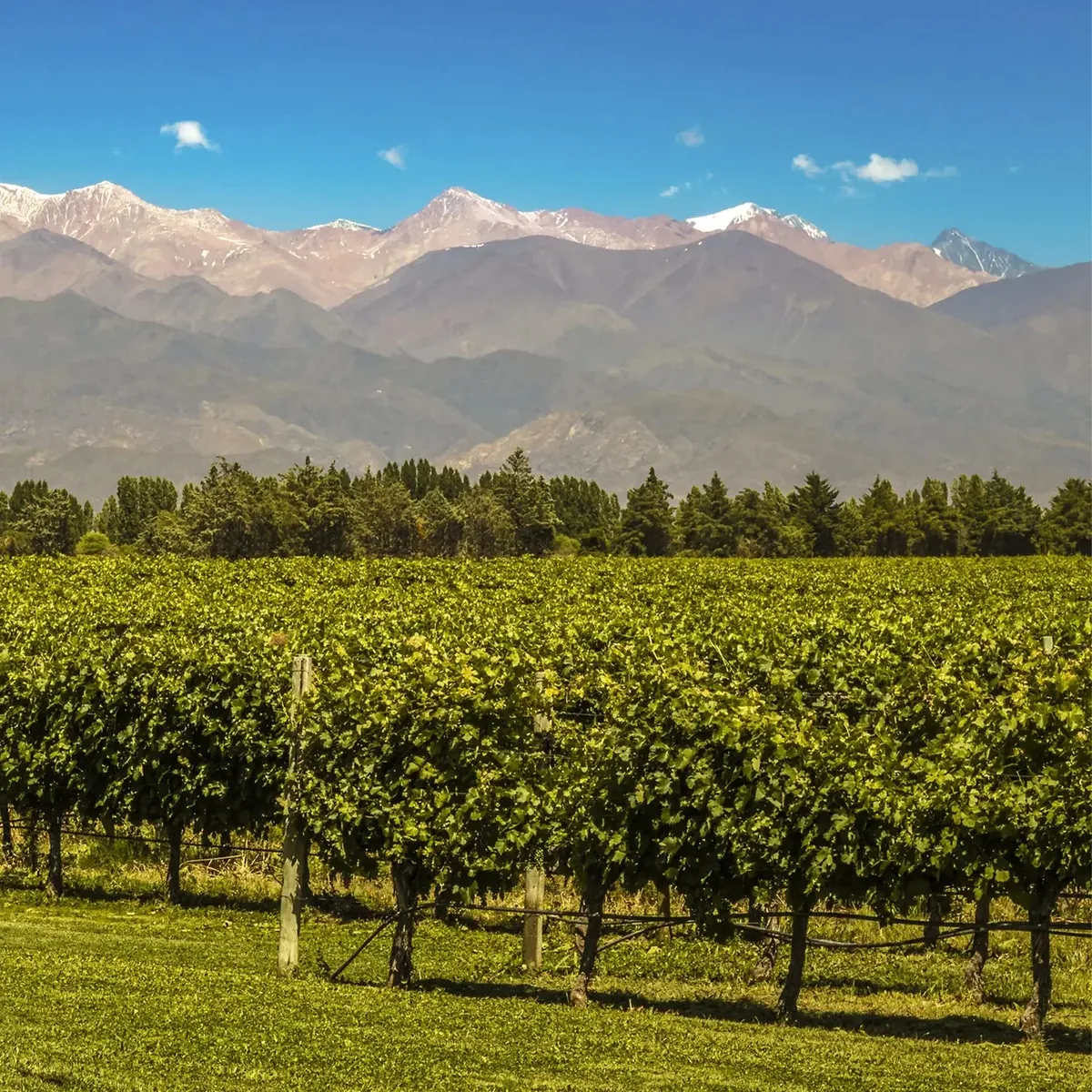
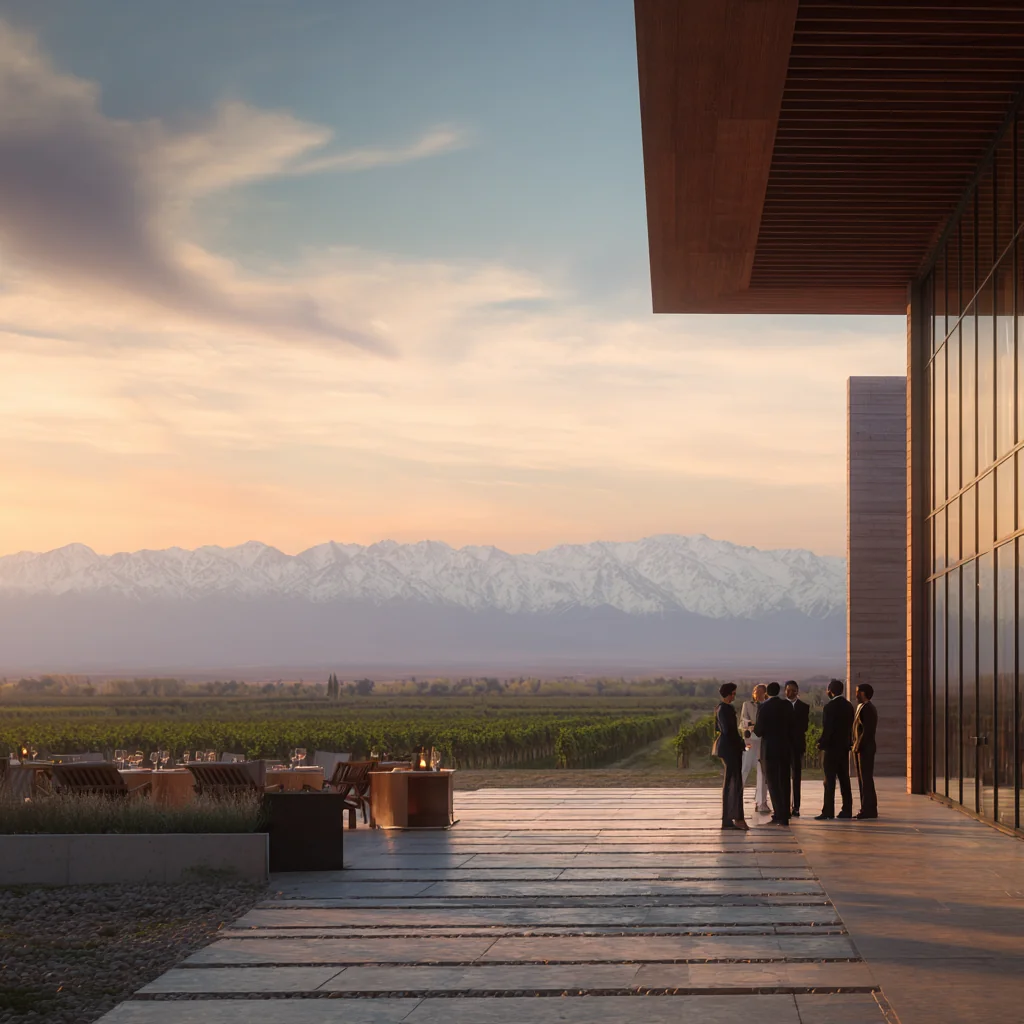
- Altitude. The vineyards of Luján de Cuyo sit around 800-1,000 metres; those of Uco Valley reach 1,200-1,700 metres. The cool nights at altitude preserve acidity that would be lost in warmer regions.
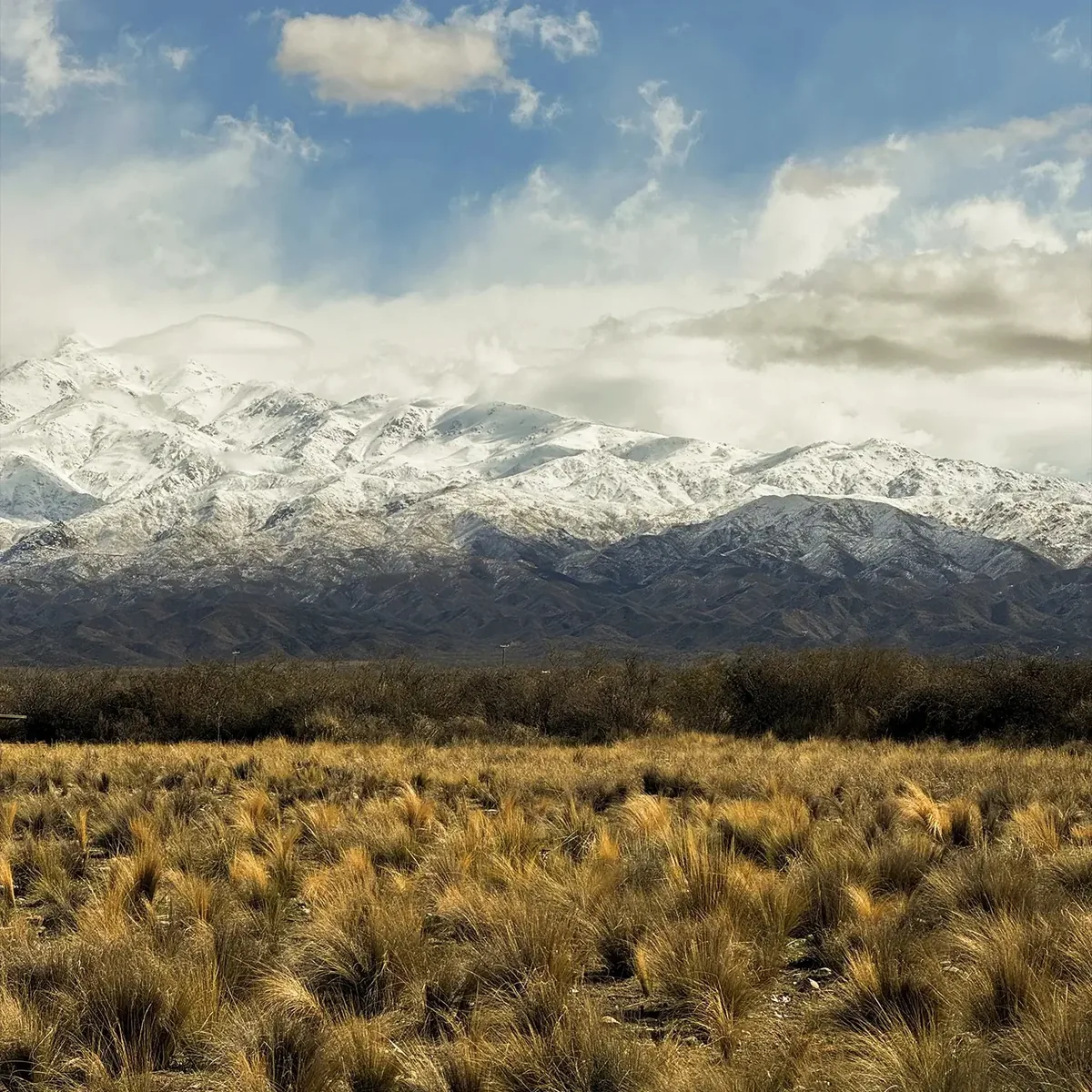
- Aridity. The eastern slope of the Andes is in rain shadow, with annual precipitation often under 250mm. This makes precise irrigation possible and reduces disease pressure to almost nothing.
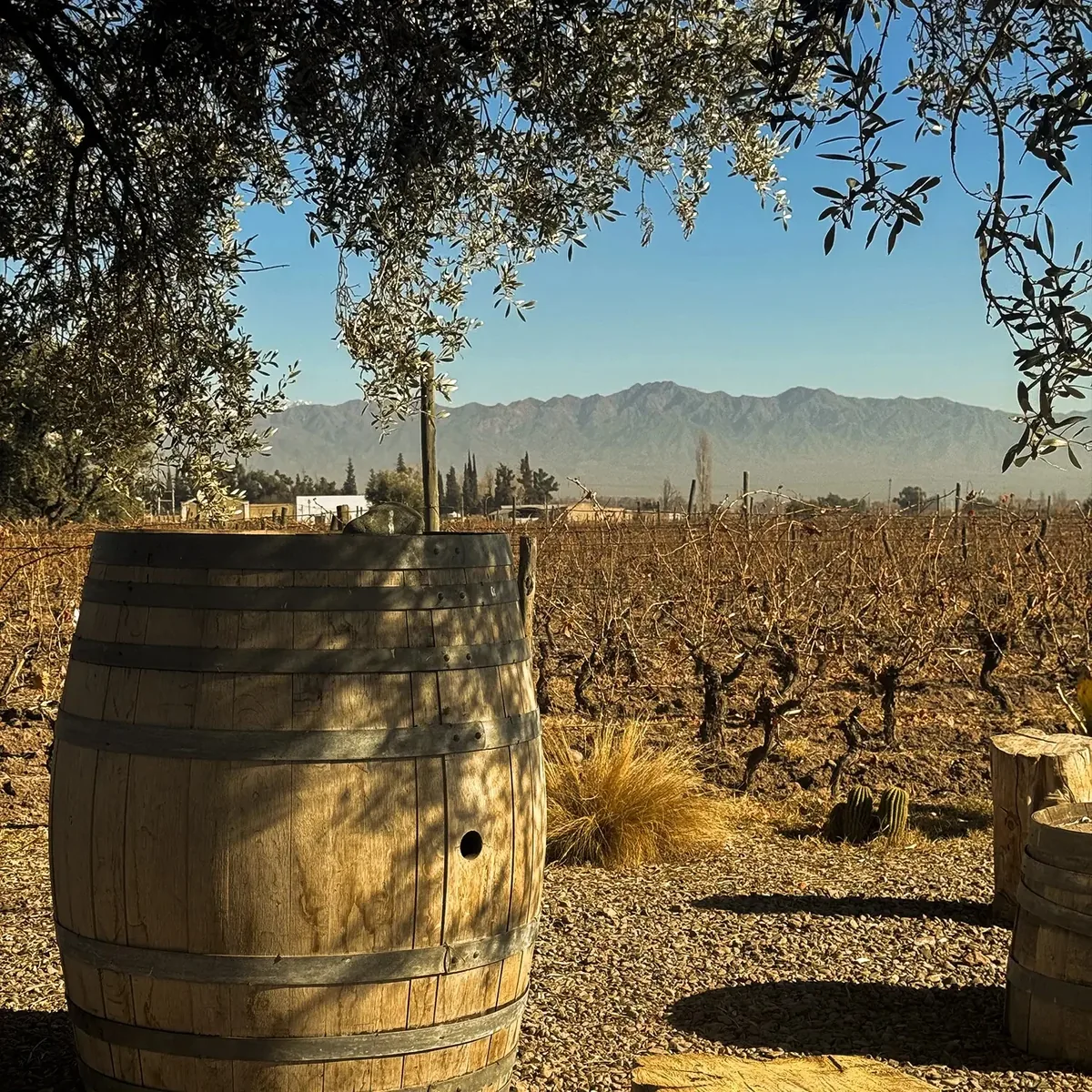
- Diurnal swing. The temperature difference between daytime and nighttime can exceed 20°C in summer. The grapes ripen fully during the day and retain acidity and aroma during the cold nights.
These three factors together produce what international critics have come to recognize as the Mendoza Malbec signature: deep colour, ripe fruit, structured tannins, fresh acidity, capacity to age. It's a profile that's recognizable across producers but expresses different sub-regional character.
The two Malbec styles you'll taste in Mendoza
Lower-altitude Luján de Cuyo Malbec
From the historic vineyards of Agrelo, Vistalba, Las Compuertas. Riper, more textured, often with strong oak influence. The classical style that built Argentine Malbec's international reputation. Producers include Catena Zapata, Susana Balbo, Achaval-Ferrer.
High-altitude Uco Valley Malbec
From Gualtallary, Paraje Altamira, Vista Flores. Cooler, leaner, more aromatic. Less oak influence, more emphasis on terroir specificity. The newer style that defines the cutting edge of Argentine wine in 2026. Producers include Zuccardi Valle de Uco, the Catena Adrianna Vineyard project, Domaine Bousquet.
Tasting them side by side
The most useful exercise for understanding Argentine Malbec is to taste a Luján version and a Uco version from the same producer back to back. Almost every premium estate that has vineyards in both regions will pour them this way if you ask. The contrast is qualitative, not subtle.
The international rehabilitation of Malbec in France
The commercial success of Argentine Malbec eventually circled back to influence its native country. In Cahors, where Malbec had been declining for decades, the Argentine success story renewed interest in the grape and prompted significant investment in quality-focused production. Several Bordeaux producers have also reintroduced more substantial Malbec components into their blends.
The current global Malbec planting reality is that Argentina holds roughly 70% of the world's Malbec vineyards, with France a distant second. The grape's survival as a significant wine variety is now structurally Argentine.
Frequently asked questions
Is Argentine Malbec really different from French Malbec?
Yes, meaningfully. The climate and altitude in Mendoza produce a fundamentally different style — riper, more aromatic, more accessible — than the structured, sometimes austere wines of Cahors. Both are valid expressions of the grape.
What should I look for in a serious Mendoza Malbec?
Vintage and sub-region matter more than producer brand. Look for specific vineyard names on the label (e.g., Adrianna Vineyard, Piedra Infinita) and recent vintages (3-7 years old for current drinking; older for cellar wines).
How long do premium Mendoza Malbecs age?
The serious wines from the top producers are built for 10-20 years of cellar life. The everyday Mendoza Malbecs are best within 3-5 years.
Why is Argentine Malbec generally cheaper than French wines of equivalent quality?
A mix of factors: labour costs, currency dynamics, and the fact that Mendoza is geographically further from major export markets. The value at the premium tier (50-150 USD bottles) is generally excellent compared to Burgundy or Bordeaux at the same price point.
The Malbec story is, at its heart, the Mendoza story. If you'd like us to design a private tour that traces it through both Luján de Cuyo and Uco Valley, with side-by-side tastings from the same producers, get in touch via WhatsApp.
More questions? Check our FAQ with 25 common questions about tours, prices, logistics, and Alta Montaña.
Taste the full Malbec story with us
Personalized advice · Confirmed bookings · Premium experiences