



"If you've tasted Napa Valley, you owe it to yourself to taste Mendoza." Once you've made the comparison yourself, you'll understand why.
For decades, Napa Valley was the answer when American wine lovers thought "great wine country travel." That answer hasn't changed — Napa is exceptional. But the question has expanded. A new comparison is on every serious wine traveler's mind: Mendoza versus Napa, side by side, by the metrics that matter.
This isn't a contest where one wins and one loses. It's a comparison of two great wine regions, each magnificent in its own way, and a guide for choosing the one that fits your trip.
The wines: tradition versus altitude
Napa Valley built its global reputation on Cabernet Sauvignon and Chardonnay, both at the highest international level. The valley floor sits between 16 and 800 m above sea level, with a Mediterranean climate that produces classically structured wines.
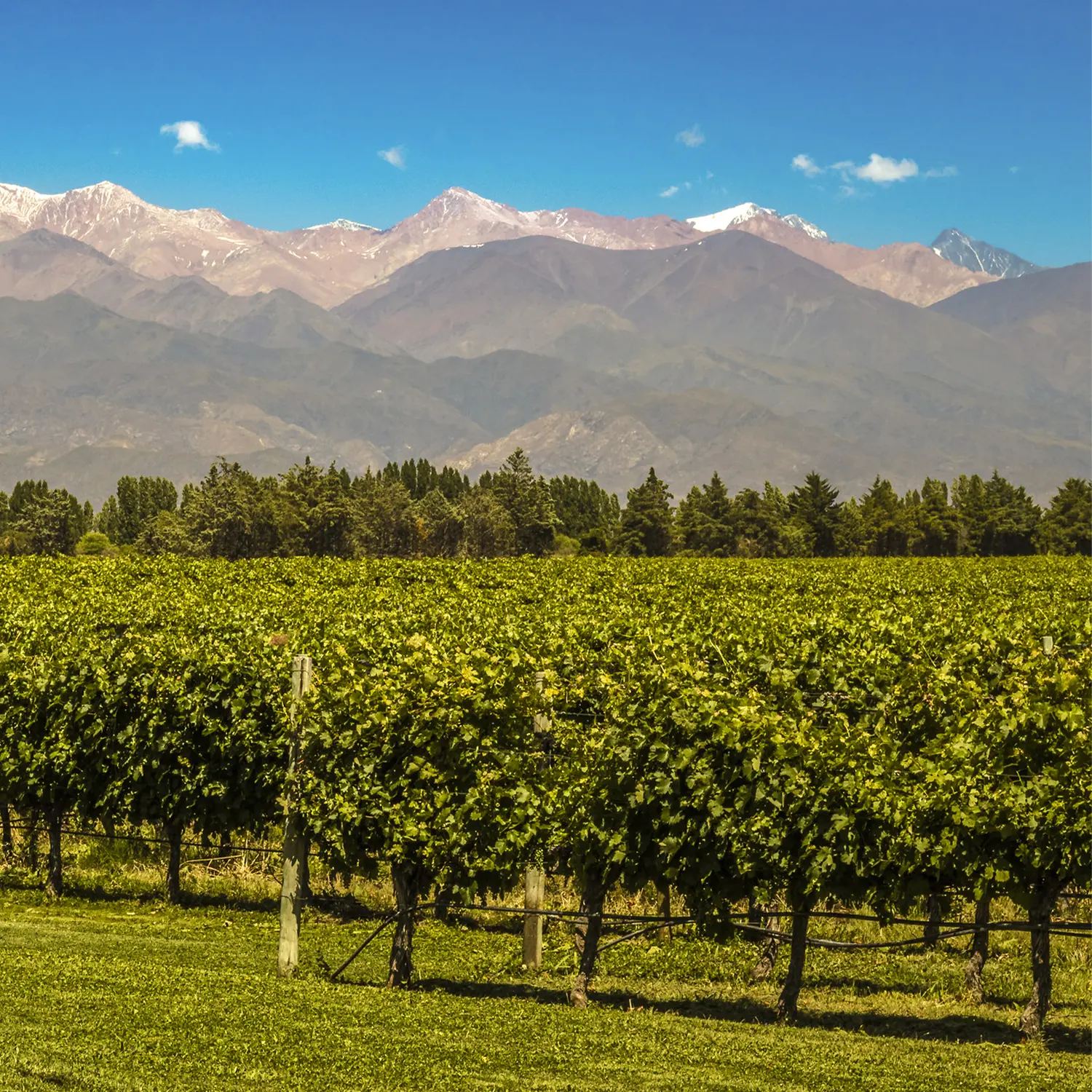
Mendoza answers with Malbec at altitude. While Napa wines come from low elevation, Mendoza's vineyards sit between 800 and 1,500 m, with Uco Valley pushing to 1,700 m. That altitude produces wines with intense color, fresh acidity and a particular concentration that has redefined what Argentine wine means globally.
Both produce world-class wine. The difference is that Napa's wines often feel like the perfection of a known formula, while Mendoza's feel like the discovery of a new one.
The landscape: cypresses versus Andes
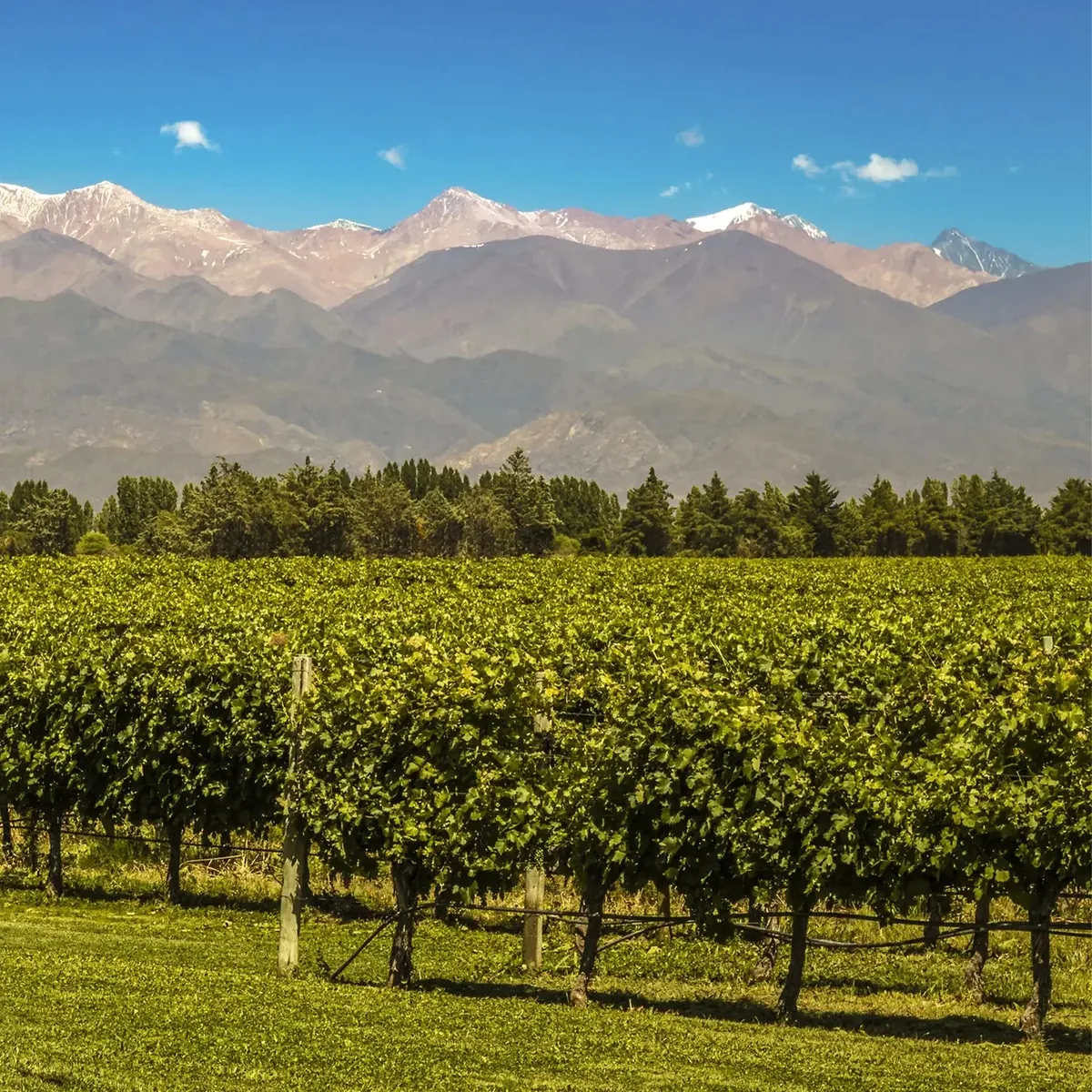
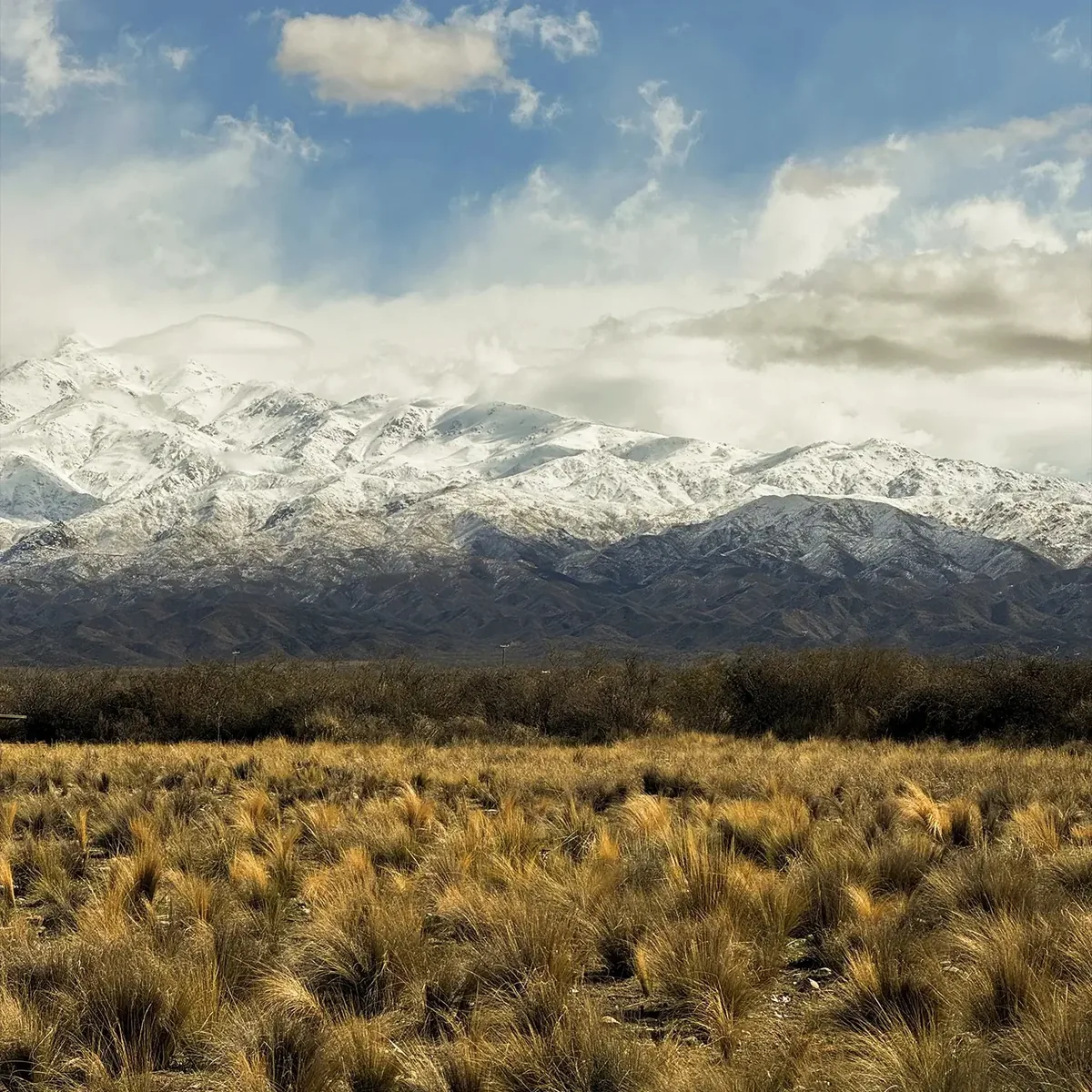
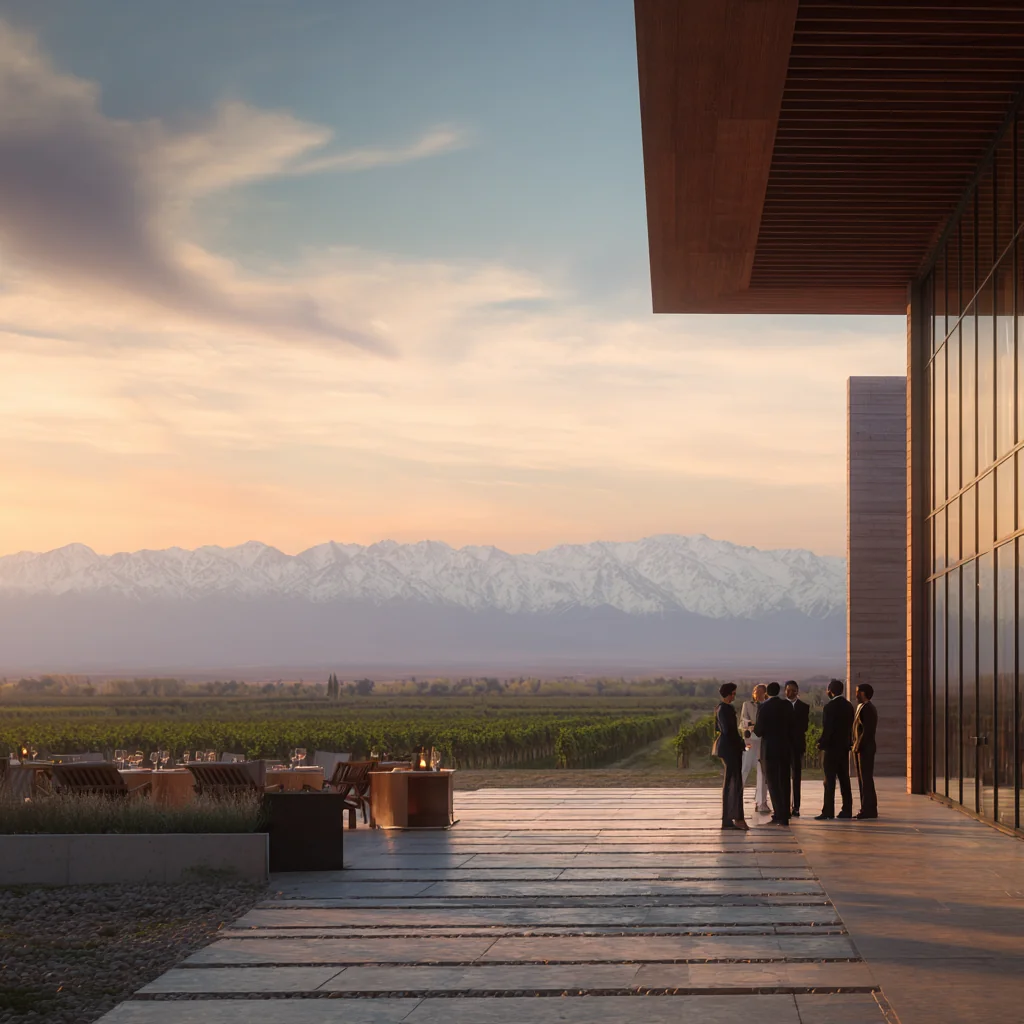
Driving through Napa is one of America's great wine drives — undulating green hills, oak trees, cypress-lined estates. Driving through Uco Valley is something else entirely. The Andes Mountains stand seven thousand meters tall on the horizon, the air is thin and clear, the vineyards stretch toward snow-capped peaks. Both are beautiful. One is intimate, the other cinematic.
The price: this is where it changes
For an equivalent quality of wine and experience, Mendoza is significantly more affordable than Napa Valley. A premium tasting at a top Napa winery often costs USD $75-150. The same caliber of tasting at Mendoza's most prestigious wineries (Catena Zapata, Susana Balbo, Zuccardi) costs USD $30-60.
Hotels follow the same pattern. A luxury wine trip to Mendoza simply gets you more — more wineries, more meals, more nights, more depth — for the same investment.
The crowds: a real difference
Napa receives 4 million tourists per year. Mendoza receives approximately 800,000. The math of intimacy is straightforward.
Mendoza's boutique wineries, the ones connected to private wine tours like ours, often host fewer than 30 people per day. You find yourself in conversation with the winemaker, not herded through with a script.
The food: France versus Argentina
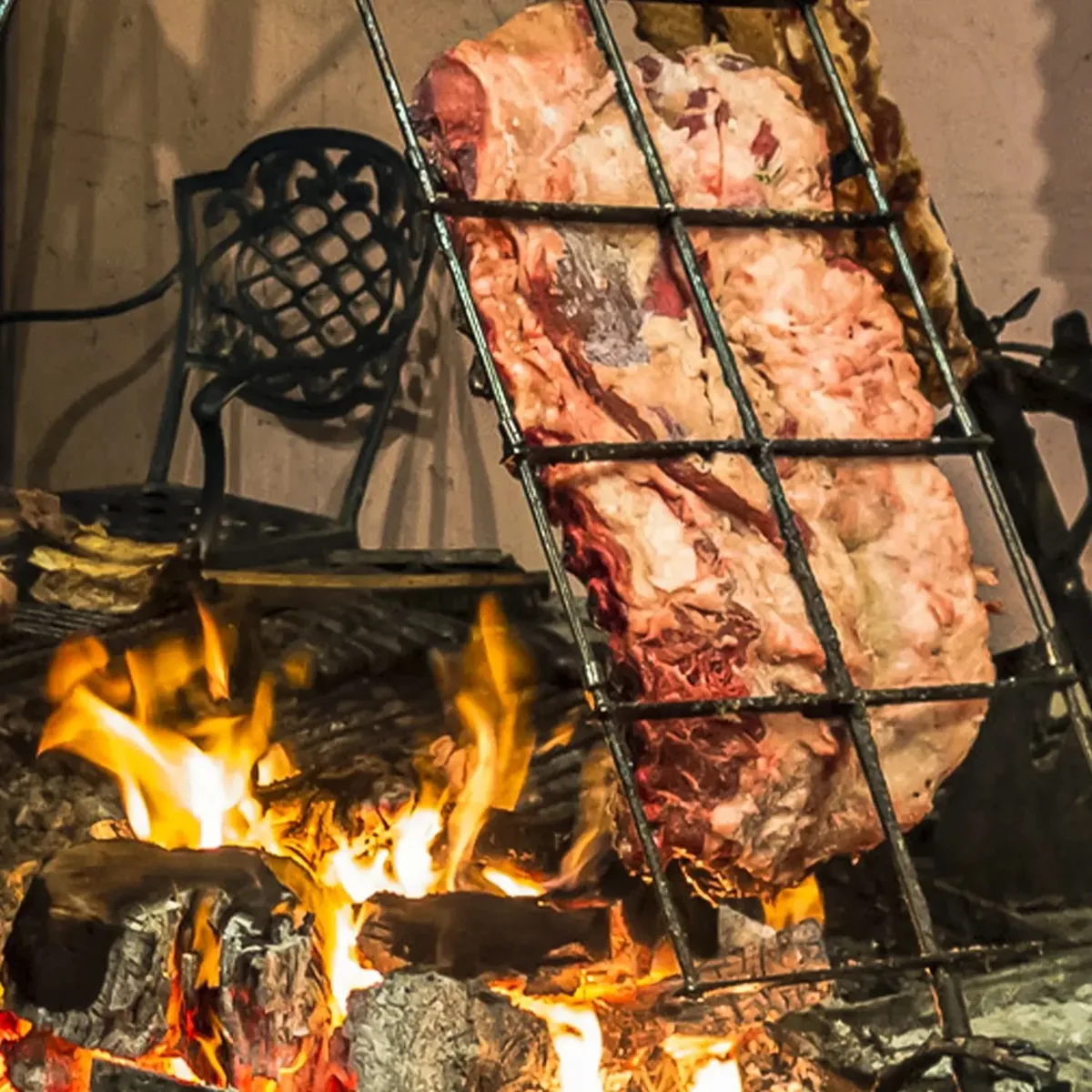
Napa has The French Laundry, Single Thread, Bouchon. Mendoza has Argentine asado paired with Malbec — fire-cooked beef, often grass-fed, prepared by chefs who know every cut. Top restaurants like 1884 (Francis Mallmann), Casa Vigil and Azafrán rival anything internationally.
Getting there
Napa: 90-minute drive from San Francisco. Mendoza: 9-hour overnight flight from Miami plus 2-hour internal flight. Mendoza is further — but the trip is part of the experience.
The verdict
If you want a quick wine getaway from anywhere in the United States, Napa wins on logistics. If you want to discover a wine region that combines world-class wine with cinematic landscapes, intimate winery access and meaningful value, Mendoza is the answer.
Many of our travelers visit both. Napa is the polished classic, Mendoza is the new discovery.
Discover our luxury wine tours in Mendoza and let us design the experience that fits your taste.
More questions? Check our FAQ with 25 common questions about tours, prices, logistics, and Alta Montaña.
Plan your private Mendoza experience
Personalized advice · Confirmed bookings · Premium experiences