
Mendoza is not a single wine destination. It's three very different regions, each with its own personality, geography and way of making wine.
Understanding the differences between Luján de Cuyo, Maipú and Uco Valley is the first important decision of any wine tourism trip to Mendoza. Each has a distinct profile, its own distances and wineries worth knowing. In this guide we'll tour them one by one.
General map: how the regions are distributed
Mendoza's three main wine regions are south of the capital city, at distances from 25 minutes to 2 hours. All are at the foot of the Andes, but with very different altitudes and soils.
- Maipú: the closest, 25–30 minutes from downtown. Average altitude: 700 meters.
- Luján de Cuyo: 30–40 minutes from downtown. Altitude: 900–1,100 meters.
- Uco Valley: 1h30–2h from downtown. Altitude: 1,000–1,500 meters.
Maipú: the cradle of Mendoza wine
History and characteristics
Maipú is Mendoza's most traditional region. Here the first European vines were planted in the 19th century, brought by Italian, Spanish and French immigrants. Most century-old Mendoza wineries are in Maipú: López, Trapiche, Norton, Rutini, Familia Zuccardi.
The wine style in Maipú tends to be more classic, with medium-bodied Malbecs, historic Bonardas and blends reflecting traditional knowledge. It's the ideal zone for those who want to understand Mendoza wine history.
Terroir characteristics
- Altitude: approximately 700 meters
- Soils: clayey and alluvial, with good water retention
- Climate: warm, with moderate thermal amplitude
- Star varieties: classic Malbec, Bonarda, Cabernet Sauvignon, Tempranillo
Must-visit wineries in Maipú
- Familia Zuccardi: pioneer in blends and gastronomic experiences.
- Bodegas López: one of Argentina's oldest (founded in 1898).
- Trapiche: classic of Argentine viticulture.
- Rutini: combination of tradition and modernity.
- Tempus Alba: impressive architecture with Andes view.
If you want to organize a day in Maipú, you have all the details on the Maipú winery tour page.
Luján de Cuyo: the epicenter of premium Malbec
History and characteristics
Luján de Cuyo is considered the "First Zone of Malbec" and was Argentina's first Denomination of Origin (1987). Its higher altitude and stony soils make Malbec express its maximum elegance here: red wines with notes of black fruit, violets and fine spices.
It's the zone where most boutique wineries concentrate, with premium proposals ranging from traditional to most avant-garde. It's the ideal region for those seeking the highest-end wines.
Terroir characteristics
- Altitude: 900–1,100 meters
- Soils: stony with good drainage
- Climate: cooler than Maipú, with greater thermal amplitude
- Star varieties: premium Malbec, Cabernet Franc, Petit Verdot
Must-visit wineries in Luján de Cuyo
- Catena Zapata: the most awarded winery in Argentina, Mayan pyramid-style architecture.
- Viña Cobos: pre-eminent, founded by Paul Hobbs.
- Achaval Ferrer: specialized in single-parcel Malbecs.
- Vistalba: classic with La Bourgogne restaurant.
- Casa Vigil (El Enemigo): outstanding gastronomic experience.
- Susana Balbo: the first female winemaker in Argentina.
To know in detail the perfect day in this region, visit our Luján de Cuyo private tour page.
Uco Valley: the modern wine frontier
History and characteristics
Uco Valley is the newest and most dynamic region of Mendoza wine tourism. Although it has wine history since the early 20th century, the explosion came with wineries like Salentein, Andeluna, Bodegas Bianchi and Domaine Bousquet, which bet on altitude to make different wines.
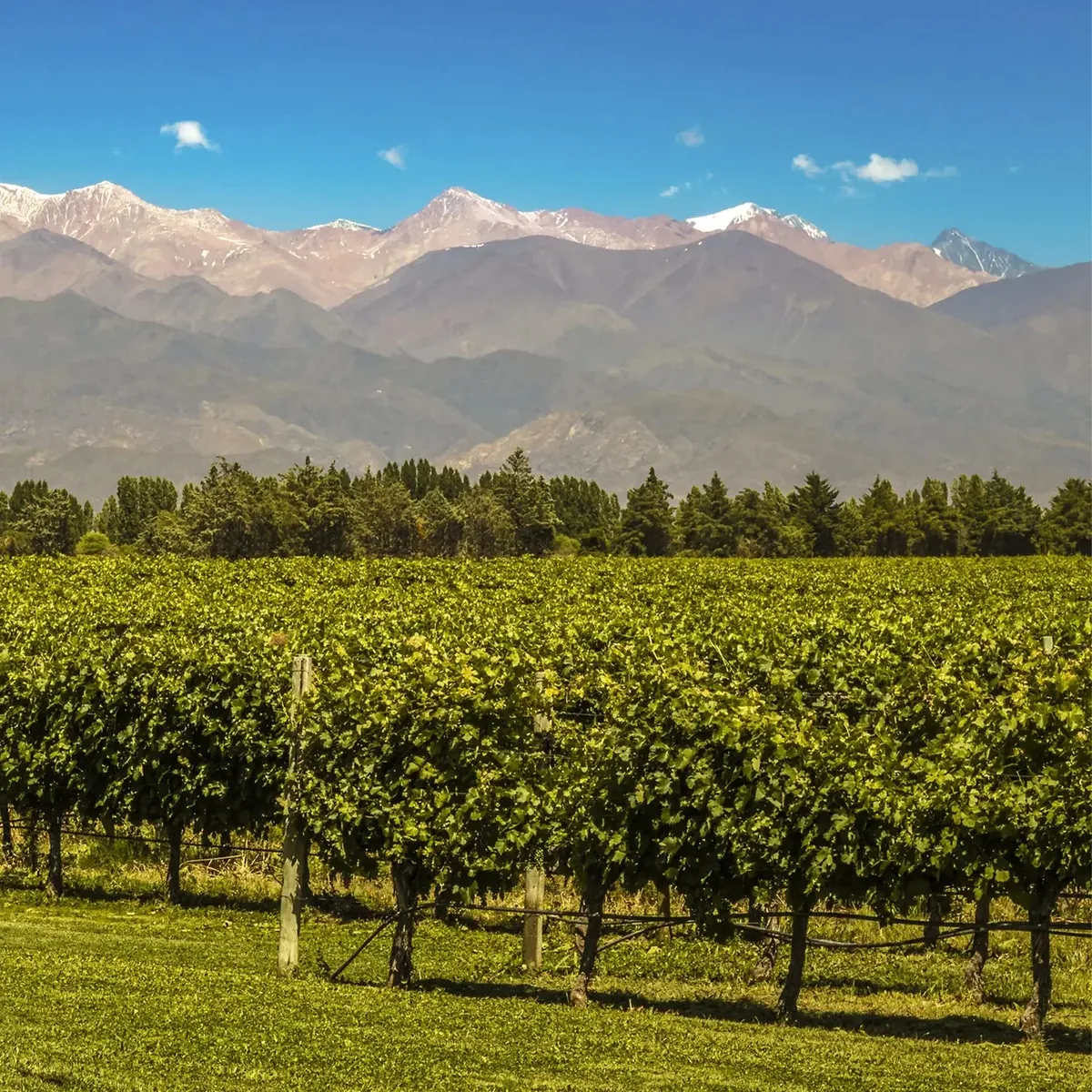
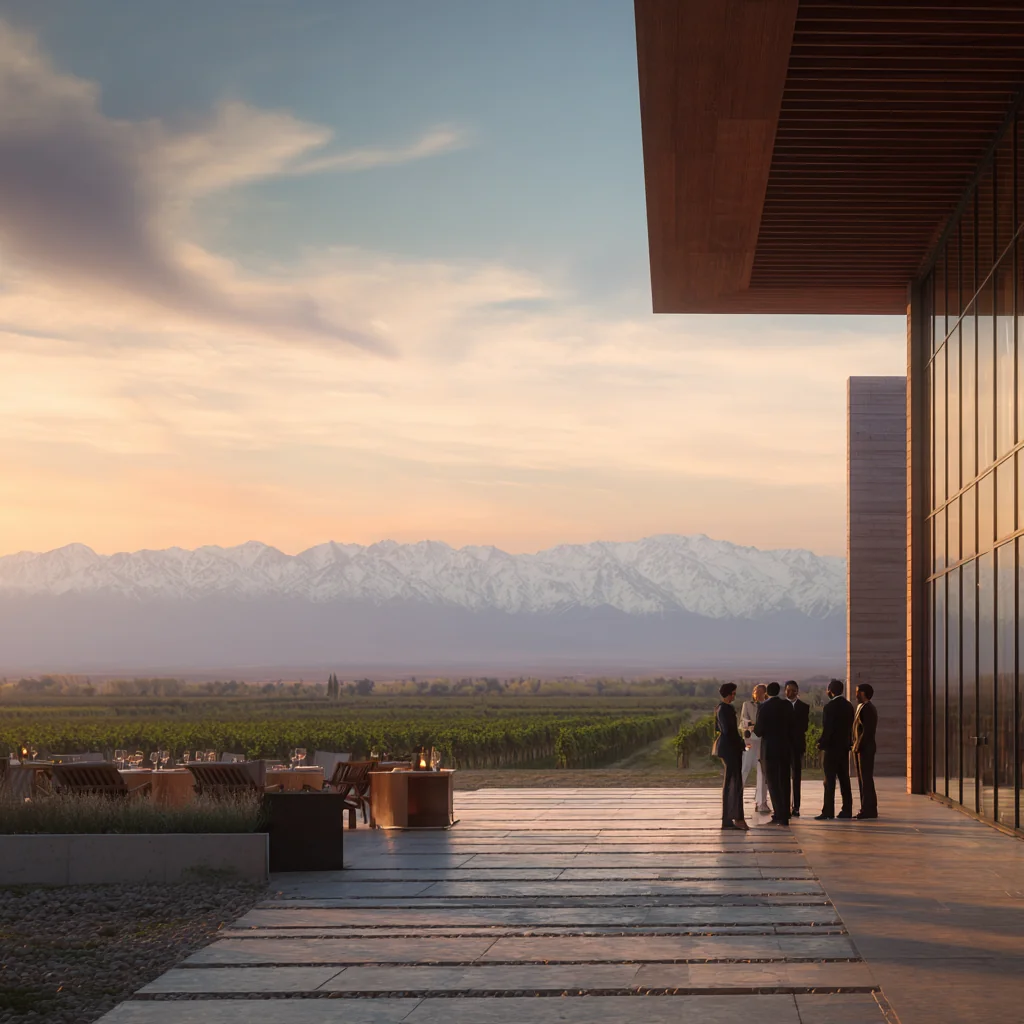
The landscape is spectacular: vineyards at 1,000–1,500 meters with the Andes Mountains as backdrop. Wineries are architecturally impressive, many designed by international studios. It's the favorite zone of wine lovers seeking modern experiences and avant-garde wines.
Terroir characteristics
- Altitude: 1,000–1,500 meters (some Gualtallary parcels reach 1,700)
- Soils: stony, calcareous, with many minerals
- Climate: colder, with nights that can drop 20°C from the day
- Star varieties: high-altitude Malbec, Cabernet Franc, Chardonnay, Sauvignon Blanc
Sub-regions of Uco Valley
- Tupungato: the most extensive, with large and boutique wineries.
- Tunuyán: intermediate altitude, wines with elegance.
- San Carlos (Gualtallary): the highest sub-region, wines with maximum mineral expression.
Must-visit wineries in Uco Valley
- Salentein: spectacular architecture, art museum and excellent restaurant.
- Andeluna: view of Aconcagua and high-altitude wines.
- Domaine Bousquet: pioneer in organic wines.
- Bodega La Azul: warm family experience.
- SuperUco: extreme high-altitude biodynamic wines.
- Bodegas Bianchi: contemporary design and memorable lunches.
If you want to explore this zone, all details are on the Uco Valley private tour page.
Which to choose if you only have one day?
This is the most common question. The answer depends on your profile:
- If you value tradition and history: Maipú. You'll learn a lot about the origins of Mendoza wine.
- If you're interested in premium wines: Luján de Cuyo. The zone with the highest concentration of top labels.
- If you seek architecture and modern wines: Uco Valley. The most visually impressive.
- If it's your first time in Mendoza: Luján de Cuyo. It has the best balance of quality, distance and variety.
What if you have 2 or 3 days?
- 2 days: Luján de Cuyo + Uco Valley. The most requested classic-modern combination.
- 3 days: the three regions, ideally with a fourth day for an excursion to the High Mountains.
Distances between regions
- Maipú ↔ Luján de Cuyo: 30 minutes
- Maipú ↔ Uco Valley: 1h30
- Luján de Cuyo ↔ Uco Valley: 1h15
That's why we recommend not mixing regions in the same day. The combination of transfers and tastings exhausts and wastes time. To dive deeper into how to plan well, we recommend our guide to organizing a winery tour.
Frequently asked questions
Which has the most expensive wines?
Generally Luján de Cuyo and Uco Valley. In Maipú, wines tend to be more accessible, although there are premium exceptions.
Which is best to visit with family?
Maipú has more wineries with spacious settings and family-friendly proposals. Uco Valley is ideal for groups that value spectacular landscape.
Which is the least touristy zone?
Some sub-regions of Uco Valley like San Carlos and Gualtallary are still less visited, with small wineries and very intimate experiences.
Are there other wine regions in Mendoza?
Yes, although less developed for wine tourism: San Rafael (south), San Martín (east) and high-altitude zones like La Consulta. Interesting for those who already know the three main ones.
If you want to plan a trip that maximizes the three Mendoza regions, contact us via WhatsApp. We know every winery and build personalized itineraries based on your interest and available time.
Private tours to all three regions
Luján · Maipú · Uco Valley